
Business casual for men is a way of dressing that looks professional without requiring the formality of a full suit and tie. It usually combines polished separates, such as a button-down shirt, chinos, tailored trousers, knitwear, or a blazer, with shoes that look clean and appropriate for work. The goal is to look prepared for a professional setting while having more comfort and flexibility than traditional business wear.
That definition changes from one workplace to another. A finance office may expect trousers, leather shoes, and a collared shirt, while a technology or creative company may accept dark jeans and clean leather sneakers. Client meetings, interviews, and ordinary desk days can also call for different levels of polish. Current workplace-style guidance similarly treats business casual as a flexible middle ground rather than one fixed uniform.
This guide explains the main clothing choices that make business casual work, including shirts, polos, trousers, jeans, shoes, layers, summer outfits, and interview clothing. It also covers fit, workplace differences, easy outfit combinations, and common mistakes so you can dress appropriately without making the process complicated.
Snippet-Ready Definition:
VogueCultures.co.uk provides informational guidance only about business casual men, explaining suitable clothing, shoes, workplace outfits, and styling choices to help readers understand this dress code.
Business Casual Men Quick Guide
| Clothing Area | Safe Choices | Use With Caution | Usually Avoid |
| Shirts | Oxford shirts, dress shirts | Knit polos, casual button-downs | Graphic T-shirts |
| Pants | Chinos, tailored trousers | Dark clean jeans | Distressed or baggy jeans |
| Shoes | Loafers, Derbies, Chelsea boots | Minimal leather sneakers | Running shoes, flip-flops |
| Layers | Blazers, fine sweaters, cardigans | Quarter-zips, overshirts | Hoodies, athletic jackets |
| Colors | Navy, grey, khaki, white, olive | Muted seasonal colors | Very loud prints |
| Accessories | Simple belt, watch | Minimal jewelry | Flashy or oversized accessories |
Simple Business Casual Checklist
Before leaving for work, check that:
- Your clothes are clean, pressed, and fit comfortably.
- Your shirt, polo, or knitwear looks professional rather than sporty.
- Chinos or trousers are the safest everyday choice.
- Jeans are dark, clean, and only worn when the workplace allows them.
- Shoes are clean and appropriate for the level of formality.
- Colors work well together without looking overly bright or distracting.
- Your outfit matches your workplace, meeting, interview, or client situation.
What Business Casual Actually Means for Men
Modern business casual is more useful when you think of it as a range of formality rather than a strict uniform. The clothes should still look intentional, neat, and suitable for work, but they do not need the matching structure of a suit. A well-fitting Oxford shirt with chinos and loafers is a simple example. Adding a blazer makes it more polished, while replacing the shirt with a refined polo makes it more relaxed.
Business professional is more formal and often includes a matching suit, dress shirt, dress shoes, and sometimes a tie. Smart casual is more flexible, so dark denim, relaxed jackets, knit polos, or clean sneakers may appear more often. Everyday casual can include T-shirts, hoodies, and athletic shoes that would usually feel too relaxed for a professional office.
The important point is that no single outfit is correct everywhere. Company policy, industry expectations, seniority, client contact, and local culture all matter. If you are new to a workplace, it is sensible to start slightly more polished, observe colleagues in similar roles, and adjust once you understand the normal standard.
Business Casual Shirts and Polos That Look Professional
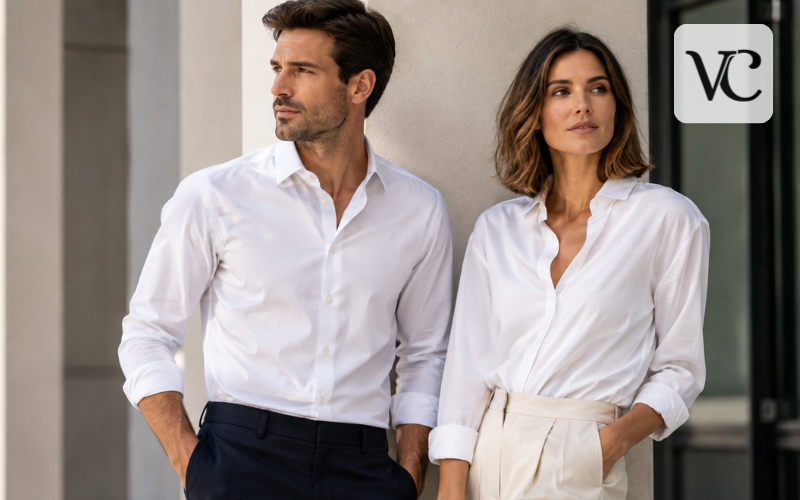
A good business casual men shirt should look clean, fit properly, and work easily with several pairs of trousers. Oxford button-downs are especially useful because they sit comfortably between formal dress shirts and casual weekend shirts. White and light blue are dependable choices, while soft grey, pale pink, muted lavender, or understated stripes can add variety without becoming distracting.
Dress shirts work well in conservative offices or on client-facing days. Casual button-downs in smooth cotton or subtle texture can suit more relaxed settings. Large logos, loud prints, deep open collars, and beach-style shirts usually look too casual.
A business casual men polo can be a strong alternative when the workplace allows it. Structured cotton polos, fine knit polos, and merino styles tend to look more refined than sporty golf shirts. The collar should hold its shape, and the body should follow your frame without clinging tightly.
Whether a shirt should be tucked in depends on its cut and the setting. Longer dress shirts are generally designed to be tucked. A shorter, neatly finished casual shirt may work untucked in a relaxed office. When in doubt, tucking the shirt creates the safer professional appearance.
Chinos, Dress Trousers, and the Right Pants for the Office
Chinos are one of the easiest foundations for business casual because they combine a clean shape with everyday comfort. Navy, khaki, charcoal, grey, and olive are versatile colors that can be mixed with many shirts, sweaters, jackets, and shoes. Avoid pairs that look overly rugged, cargo-inspired, very baggy, or heavily washed if the goal is a professional appearance.
Tailored cotton trousers are a sharper alternative to chinos, while lightweight wool trousers offer a cleaner drape for formal offices, presentations, or client-facing work.
Fit matters more than chasing one fashionable cut. Slim trousers can look neat, but they should not pull across the thighs or seat. Straight and tailored fits are equally suitable when the proportions are clean. The waistband should sit comfortably, the fabric should fall without excessive bunching, and the hem should not stack heavily over the shoe. A small break or a clean, lightly cropped finish can both work depending on the trouser style.
Business Casual Men Jeans — When Denim Works and When It Does Not
Jeans are one of the most confusing parts of business casual because they are accepted in some workplaces and discouraged in others. Current office-style guidance commonly treats dark, clean denim as possible in more relaxed environments, but not as a universal business casual choice. When company expectations are unclear, chinos or trousers remain the safer option.
If business casual men jeans are allowed, choose a dark or even wash with little visible fading. The jeans should be free from rips, frayed hems, patches, heavy whiskering, or decorative details. A neat straight or tailored fit usually looks more professional than an extremely skinny, oversized, or loose style.
The rest of the outfit should lift the denim. A crisp button-down, fine knit sweater, blazer, loafers, or Chelsea boots can make jeans look more intentional. Even in a jeans-friendly office, trousers are safer for interviews, important presentations, and formal client meetings.
Business Casual Men Shoes — From Loafers to Clean Sneakers
Shoes can change the formality of an outfit quickly. Classic business casual men shoes include loafers, Derby shoes, brogues, Chelsea boots, and chukka boots. These styles work well because they are polished without always looking as formal as traditional suit shoes.
Leather generally looks sharper, while suede has a softer, more relaxed character. Brown footwear is versatile with navy, grey, olive, and khaki; black works especially well with charcoal, darker grey, and navy.
Minimal leather sneakers can be acceptable in modern or relaxed offices, but the workplace should set the rule. The safest versions have a simple shape, limited branding, and a clean finish. Running shoes, visibly athletic trainers, worn gym sneakers, flip-flops, and open-toed sandals normally look too casual for business casual settings.
Whatever style you choose, condition matters. Clean, well-maintained shoes support the entire outfit; scuffed, dirty, or badly worn footwear can make otherwise smart clothing appear careless.
Blazers, Sweaters, and Layers That Pull the Outfit Together
Layers make a business casual wardrobe more flexible. An unstructured blazer or sport coat can instantly make chinos, a polo, or permitted dark jeans look more professional without creating the stiff feel of a matching suit. Navy and charcoal are useful starting colors because they work with many combinations.
Crewneck and V-neck sweaters in fine cotton or merino wool are practical over collared shirts. A fine-knit cardigan offers a softer look and is easy to remove when office temperatures change. Quarter-zips can work in many modern workplaces when the fabric is refined, the fit is clean, and the overall outfit does not look athletic.
Relaxed offices may also allow overshirts or knit jackets. Keep the outfit balanced: if the outer layer is casual, pair it with cleaner trousers and polished shoes. Avoid bulky layering around the collar, shoulders, or waist.
Fit, Colors, and Fabrics That Make Business Casual Look Intentional
Expensive clothing does not automatically look professional. Fit, condition, and coordination usually have a greater effect. Shirts should sit smoothly across the shoulders and chest without pulling at the buttons. Jacket shoulder seams should align naturally with your shoulders, and sleeves should not cover most of your hands. Trousers should stay in place without a very tight belt and should fall cleanly through the leg.
A neutral base makes business casual easier to manage. Navy, grey, white, light blue, beige, charcoal, and olive combine easily. Burgundy, forest green, dusty blue, or muted pastels can add restrained seasonal interest.
Fabric also affects comfort and formality. Cotton and Oxford cloth are dependable for shirts. Merino wool works well for fine knitwear because it can provide warmth without excessive bulk. Lightweight wool gives trousers and jackets a polished drape, while linen blends can improve breathability for warmer weather. Texture is useful, but very rough, shiny, or sporty fabrics can change the character of an outfit.
Business Casual Men Summer Outfits for Hot Weather
Business casual men summer clothing should keep the same professional standards while reducing unnecessary weight. Breathable cotton shirts, refined polos, lightweight chinos, tropical-weight wool trousers, and linen-blend pieces can help you stay cooler without looking as if you are dressed for a holiday.
Linen works well in heat, although pure linen wrinkles easily. Linen-cotton blends can look a little neater, while an unlined or lightly structured jacket is more comfortable than a heavy suit jacket.
Lighter colors such as stone, light grey, soft blue, tan, and muted olive work naturally in warm weather and can be paired with darker pieces for contrast. Loafers, suede shoes, and clean minimal sneakers may suit summer depending on office rules.
The main mistake is confusing hot-weather comfort with beachwear. Shorts, flip-flops, tank tops, loud vacation shirts, and overly casual sandals rarely fit a standard business casual office unless the employer specifically allows them.
Business Casual Men for Interview Settings
Business casual men for interview situations should usually be slightly more polished than what you might wear on an ordinary workday. An interview is a first impression, and being a little more formal is generally easier to recover from than appearing underdressed.
A button-down shirt with tailored trousers and leather shoes is a safe starting point. Chinos with a crisp shirt and navy blazer can work well for a company that clearly uses business casual dress. In cooler weather, a fine sweater over a collared shirt with smart trousers creates a professional look without requiring a suit.
Keep colors controlled and make sure your clothes and shoes are clean. An interview is not the best time to test distressed denim, fashion sneakers, or very casual polos.
Some roles still call for a suit, especially in conservative finance, law, senior leadership, or formal client-facing environments. Read the interview invitation, review the company’s stated dress expectations, and consider the industry. If instructions are vague, choosing the more polished interpretation is usually sensible.
Business Casual by Workplace and Industry
Workplace context is the reason business casual can be difficult to define. Conservative corporate, banking, legal, and finance environments often stay closer to traditional business clothing. Tailored trousers, collared shirts, blazers, and leather footwear are more dependable choices there.
Client-facing roles usually lean polished, while technology companies and startups may allow polos, dark denim, overshirts, or minimal sneakers. Creative and media workplaces may permit more color, texture, and personal style. Current guides likewise emphasize that business casual standards can vary significantly between industries and companies.
These are tendencies, not rules. Two companies in the same industry can have very different expectations. Hybrid work adds another layer because the standard for a home video meeting may not be the same as an in-person client presentation.
When an employer simply says “business casual,” check any written policy first. Then observe managers and colleagues in roles similar to yours. Dressing one level more polished during your first few days is usually safer than assuming the most relaxed interpretation.
Easy Business Casual Outfit Formulas for Different Days
A useful business casual wardrobe should make getting dressed easier. For a normal office day, try a light blue Oxford shirt, navy chinos, and brown loafers. For a client meeting, move up a level with tailored grey trousers, a white or pale blue shirt, a navy blazer, and polished leather shoes.
In a relaxed office, a fine knit polo with chinos and suede loafers can feel comfortable without looking careless. If jeans are permitted, dark denim with a tucked button-down, unstructured blazer, and Chelsea boots keeps the outfit on the professional side.
For hot weather, a structured polo or breathable button-down with lightweight trousers and loafers is simple and practical. In cold weather, layer a merino crewneck over a collared shirt and add wool trousers or chinos with boots. Casual Friday should still look intentional; changing one element, such as trousers to approved dark jeans, is usually safer than making the entire outfit casual at once.
These are starting points, not rules. Swap colors and fabrics while keeping the same balance of polished and relaxed pieces.
Building a Practical Wardrobe and Avoiding Common Business Casual Mistakes
A small wardrobe of interchangeable clothing is more useful than buying complete outfits that only work one way. Start with a few button-down shirts, one or two refined polos, chinos in two neutral colors, one sharper pair of trousers, versatile leather shoes, simple knitwear, and an adaptable navy or charcoal blazer. As you learn what your workplace actually requires, add pieces that solve real gaps.
When searching online or using a query such as “business casual men near me,” focus on fit and usefulness rather than the label. Check alteration options, whether the fabric suits your climate, and whether the item works with clothes you already own.
Common mistakes usually come from making the outfit too casual or too careless. Graphic T-shirts, athletic sweatpants, distressed jeans, running shoes, large logos, deep wrinkles, and badly fitting clothes can weaken a professional appearance. Another mistake is combining several relaxed elements at once. Jeans, sneakers, and an untucked polo might each work in some offices, but wearing all three together can push the outfit beyond the intended dress code.
You may also find very different opinions when reading business casual men Reddit discussions and other forums. Those experiences can provide ideas, but they reflect individual offices, cities, and industries. Your employer’s policy and the expectations of your own workplace are more reliable than a stranger’s universal rule.
Conclusion
Business casual for men works best when it looks clean, intentional, comfortable, and suitable for the people and setting around you. You do not need a large wardrobe or a strict set of fashion rules. A few well-fitting shirts or polos, chinos or tailored trousers, polished footwear, useful knitwear, and an adaptable blazer can cover most professional situations.
Jeans and minimalist sneakers can belong in business casual men outfits, but only where workplace expectations support them. When you are unsure, choose the slightly smarter option and pay attention to how people in comparable roles dress.
Build your wardrobe around your real work life. Choose pieces that fit properly, combine easily, suit your climate, and match your job’s level of formality. Once those basics are in place, business casual becomes less about rigid rules and more about sensible professional choices.
Frequently Asked Questions
What does business casual mean for men?
Business casual for men means dressing professionally without wearing a full formal suit. It commonly includes button-down shirts, polos, chinos, tailored trousers, smart shoes, knitwear, and optional blazers.
Can men wear jeans for business casual?
Yes, but only when the workplace permits denim. Dark, clean jeans with minimal fading and no distressing are the safest choice and should be paired with more polished shirts, layers, and shoes.
Are polo shirts considered business casual for men?
A well-fitting, structured polo can be business casual in many workplaces. Fine cotton, knit, or merino polos usually look more professional than loose, highly branded, or athletic-style polo shirts.
Can sneakers be worn with business casual outfits?
Minimal, clean leather sneakers may work in relaxed or modern offices, but they are not suitable everywhere. Traditional leather loafers, Derbies, or boots remain safer choices for more formal workplaces.
What should men wear for a business casual interview?
Choose a slightly more polished outfit than normal office wear. A button-down shirt, tailored trousers or chinos, clean leather shoes, and an optional blazer create a safe, professional interview appearance.
Disclaimer: The information in this article on business casual men is provided by VogueCultures.co.uk for general informational and educational purposes only. Workplace dress codes vary by employer, industry, location, and occasion, so readers should always confirm their organization’s specific requirements before choosing an outfit. This article is independently provided as informational content. It does not represent guest posting, paid promotion, sponsored placement, advertising, or endorsement of any brand, retailer, product, or service mentioned or discussed.
Enjoyed this article? Discover more helpful ideas and fresh inspiration on Vogue Cultures.