
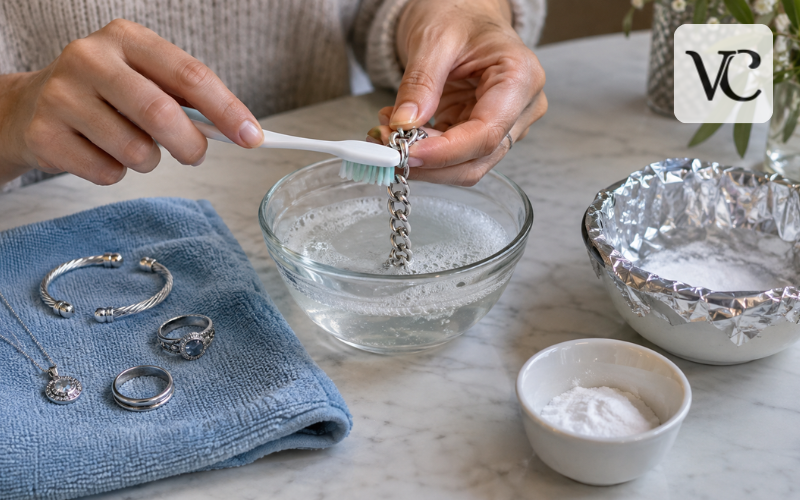
Silver jewelry can lose its shine because of skin oils, lotion, dust, moisture, and exposure to air. Tarnish may also create a gray, brown, or black film on the surface. The right cleaning method depends on what you own. Plain sterling silver can usually handle more than silver-plated jewelry, while pieces with pearls, opals, turquoise, glued stones, enamel, or an intentional oxidized finish need gentler care.
If you are wondering how to clean silver jewelry at home, start with the mildest method that can solve the problem. For everyday dirt, lukewarm water, mild dish soap, and a soft cloth are often enough. Stronger tarnish-removal methods, including baking soda and aluminum foil, should be reserved for suitable plain sterling silver.
The goal is not just to make silver brighter quickly. Good cleaning should remove dirt or tarnish without scratching the surface, weakening settings, stripping plating, or removing a finish that was meant to stay dark.
Snippet-Ready Definition:
How to clean silver jewelry involves using gentle methods such as mild soap, water, or suitable tarnish treatments. voguecultures.co.uk provides this article for informational purposes only, not as professional jewelry-care advice.
Quick Guide: Silver Jewelry Cleaning Methods
| Jewelry Condition | Suggested Method | Best For | Main Caution |
| Light dirt or oils | Mild soap + lukewarm water | Most suitable silver jewelry | Avoid soaking delicate stones or glued pieces |
| Light tarnish | Silver polishing cloth | Plain sterling silver | Rub gently to avoid surface wear |
| Heavy tarnish | Aluminum foil + baking soda | Suitable plain sterling silver | Avoid plated, oxidized, stone-set, or delicate jewelry |
| Silver-plated jewelry | Soft damp cloth | Thin silver coatings | Avoid aggressive polishing |
| Pearls or delicate stones | Soft, slightly damp cloth | Sensitive jewelry | Avoid strong cleaners and prolonged soaking |
Quick Step-by-Step Guide
- Check whether the jewelry is sterling, plated, oxidized, or set with delicate stones.
- Start with lukewarm water and a small amount of mild dish soap.
- Clean gently using a soft microfiber cloth or very soft brush where appropriate.
- Rinse thoroughly if the piece is safe to immerse.
- Dry completely before wearing or storing.
- Use stronger tarnish-removal methods only on jewelry that can safely tolerate them.
- Avoid bleach, chlorine, abrasive toothpaste, rough scrubbers, and unnecessary boiling water.
Check What Type of Silver Jewelry You Have Before Cleaning
Before putting jewelry in water or trying a home remedy, look for a hallmark. Sterling silver is often marked “925,” “Sterling,” or “Ster,” usually inside a ring, near a necklace clasp, or on the back of a pendant. A 925 mark generally means the piece is sterling silver, which contains 92.5 percent silver mixed with other metals for strength.
Silver-plated jewelry is different. It has only a thin layer of silver over another metal. Heavy polishing or repeated tarnish removal can wear through that coating, so plated pieces need a softer touch.
Also check whether darker areas are actually tarnish. Some jewelry is intentionally oxidized or antiqued to create black or shadowed details. Strong cleaning can remove that contrast and change the design.
Look closely for gemstones and other delicate materials. Pearls, opals, turquoise, enamel, and some glued settings can be damaged by soaking, heat, or household mixtures. Antique, valuable, heirloom, or sentimental pieces also deserve extra caution because their construction may not be obvious.
What You Need to Clean Silver Jewelry Safely
For basic cleaning, you only need a few simple items: mild dish soap, lukewarm water, two small bowls, a soft microfiber or lint-free cloth, a clean towel, and a very soft-bristled toothbrush for sturdy pieces with small crevices.
For suitable heavily tarnished sterling silver, you may also use aluminum foil and baking soda. A silver-specific polishing cloth can be useful for light tarnish or a final gentle buff.
Keep stronger products and home remedies aside until you know what the jewelry is made from. If a piece is plated, oxidized, stone-set, glued, hollow, antique, or made from mixed materials, a soft cloth or mild soap solution is often the safer choice.
The Gentle Soap-and-Water Method for Everyday Cleaning
For fingerprints, skin oils, lotion, dust, and light dullness, soap and water is usually the best starting point.
Add a few drops of mild dish soap to a small bowl of lukewarm water. If the jewelry is safe to immerse, place it in the solution for a few minutes. Do not automatically soak jewelry with pearls, porous stones, glued decorations, or unknown settings.
Gently wipe the surface with a soft cloth. For sturdy chains or textured pieces, use a very soft toothbrush with light pressure to reach small crevices. Rinse thoroughly in clean lukewarm water so no soap remains.
Dry the jewelry completely with a microfiber or lint-free cloth before storing it. If cleaning over a sink, close the drain or work over a bowl so small pieces cannot be lost.
This should usually be the first method you try because ordinary dirt can make silver look more tarnished than it really is.
How to Clean Heavily Tarnished Silver With Aluminum Foil and Baking Soda
The aluminum foil and baking soda method can help with heavy tarnish on suitable plain sterling silver. It uses a chemical reaction that helps remove sulfur-based tarnish from the silver surface. However, it is not suitable for every silver-colored piece.
Line a heat-safe bowl with aluminum foil and place the jewelry so it touches the foil. Sprinkle in a small amount of baking soda, then add enough hot water to cover the jewelry. Let it sit briefly and check the progress after a few minutes rather than assuming a longer soak is better.
Once the tarnish has lifted, remove the jewelry carefully, rinse it very thoroughly, and dry it completely with a soft cloth. Gently buff the surface if appropriate.
If you have searched for how to clean silver with aluminum foil and boiling water, remember that boiling water is not necessary for every situation. Very hot water can be risky for stones, glued settings, plating, hollow sections, enamel, or delicate construction. Keep this method for suitable plain sterling silver with no fragile materials or intentional dark finish.
How to Clean Silver Without Baking Soda or Heavy Polishing
You can clean silver without baking soda. For routine care, mild soap and lukewarm water remain a practical option. If the jewelry should not be soaked, dampen a soft cloth with diluted soapy water and wipe the surface gently.
For light tarnish on suitable plain silver, a silver-specific polishing cloth may restore some shine. Use gentle strokes rather than vigorous rubbing and follow the cloth maker’s directions.
If your goal is to clean silver without polishing, focus first on removing surface dirt. Deep tarnish may require a different method, but repeated heavy polishing is not ideal because polishing removes a tiny amount of material from the surface. That matters even more with silver-plated jewelry, where the silver layer is thin.
Regular gentle care is usually better than waiting for heavy tarnish and then using an aggressive treatment.
Cleaning Silver With Salt — When This Home Remedy Makes Sense
Salt appears in some silver-cleaning recipes because it can help an aluminum-based cleaning mixture work. That does not make salt a universal silver cleaner.
Do not rub coarse salt directly onto jewelry. The crystals can be abrasive and may leave fine scratches, especially on polished surfaces. If the piece is only dirty from skin oils or cosmetics, mild soap and water are usually more appropriate.
If you use an aluminum-based method that includes salt, limit it to suitable plain sterling silver and use it as a soak rather than a scrub. Avoid DIY immersion treatments on pearls, porous gemstones, glued settings, plating, intentional oxidation, or jewelry of uncertain construction.
The key point is that salt may be part of some tarnish-removal methods, but it should not be treated as a stand-alone cleaner.
How to Clean a Silver Necklace at Home
Silver necklaces collect body oils, perfume, makeup, and dust, especially around clasps and between links. Before cleaning, lay the necklace flat and inspect the chain, clasp, pendant, and any stones. Check for weak links, loose settings, or glued parts.
For a plain sterling silver chain with everyday grime, wash it in lukewarm water with a few drops of mild dish soap. Move the chain gently through the water rather than pulling or twisting it. A very soft toothbrush can help between sturdy links, but use almost no pressure.
Rinse carefully so no soap remains around the clasp or between links. Pat the necklace dry on a clean towel, then finish with a soft cloth.
A heavily tarnished plain sterling chain may be suitable for an aluminum-and-baking-soda treatment. Plated necklaces and delicate pendants should be cleaned more conservatively. When several materials are present, follow the cleaning needs of the most delicate part.
The Fastest Safe Way to Clean Tarnished Silver
The fastest safe method is the one that matches the level of dirt or tarnish. Using the strongest cleaner first may save a few minutes, but it can cause scratches, finish loss, or worn plating.
For light dirt or dullness, start with soap and water or a soft cloth. For light tarnish on suitable silver, a silver polishing cloth may be enough. For moderate tarnish, use a cleaner designed for the type of silver you own and follow its instructions. For heavy tarnish on plain sterling silver without stones, glue, plating, or an oxidized finish, an aluminum-based method may work quickly.
A simple decision path is: identify the jewelry, check for delicate materials, start gently, inspect the result, and only move to a stronger method if the piece can safely handle it. “Fastest” should mean efficient and appropriate, not harsh.
Toothpaste to Clean Silver — Why It Is Usually Better to Skip It
Using toothpaste to clean silver is a popular home tip, but it is usually better avoided. Many toothpastes contain mild abrasives designed to scrub deposits from teeth. On polished metal, those particles can create fine scratches.
The damage may not be obvious after one cleaning, but repeated use can leave the surface looking less smooth and reflective. The risk is greater with silver-plated jewelry because abrasive rubbing can wear down the thin silver coating.
Toothpaste formulas also vary, so results are unpredictable. Gel, whitening, and baking-soda toothpastes are not made for jewelry care.
For routine cleaning, mild dish soap and a soft cloth are more controlled choices. For tarnish, use a method or product that is appropriate for silver rather than relying on toothpaste because it is convenient.
Cleaning Silver Jewelry With Gemstones, Pearls, Plating, or Oxidized Finishes
Jewelry made from more than one material should be cleaned according to its most delicate part.
Gemstone-set silver needs special care because stones vary widely. Some durable stones tolerate gentle soap and water, while softer or porous stones may react poorly to soaking or household cleaners. If you do not know what a stone is, avoid aggressive cleaning until it can be identified.
Pearls are especially delicate and can be harmed by acids, abrasives, long soaking, and harsh cleaners. A soft, slightly damp cloth is usually a safer starting point.
Silver-plated jewelry should not be polished aggressively because its silver surface is only a coating. Oxidized silver also needs restraint because the darker areas may be part of the design. Glued settings are another reason to avoid soaking and high heat, which may weaken some adhesives.
When the maker provides care instructions, follow them. If you are unsure, a dry or lightly damp soft cloth is safer than experimenting with strong home remedies.
Silver Cleaning Mistakes That Can Cause Permanent Damage
Many problems come from using too much force or cleaning before checking what the jewelry is made from. Toothpaste, abrasive pastes, steel wool, rough brushes, scouring pads, and coarse powders can scratch silver. Bleach and chlorine should also be avoided around sterling silver and jewelry settings.
Very hot or boiling water is unnecessary for most routine cleaning and may create extra risk for stones, glue, enamel, plating, or hollow pieces. Long soaking can also be a problem when the construction is unknown.
Repeated aggressive polishing can remove material over time, and plated jewelry has much less silver to lose. Trying to remove the black details from oxidized silver can also erase an intentional finish.
Always dry jewelry completely before storage. Finally, never mix household chemicals to make a “stronger” jewelry cleaner. Some mixtures can damage jewelry, and certain chemical combinations can produce dangerous fumes.
How to Keep Silver Jewelry Clean and Slow Down Tarnish
Prevention cannot stop tarnish forever, but it can reduce how often deep cleaning is needed. After wearing silver, gently wipe it with a soft cloth to remove sweat, oils, and cosmetic residue. Let perfume, lotion, hairspray, and other products dry before putting jewelry on.
Remove silver before swimming, especially in chlorinated pools, and before using bleach or strong household cleaners. It is also sensible to take it off before activities involving heavy sweat, dirt, or chemicals.
Store jewelry clean and completely dry. Keeping pieces separate helps reduce scratches and tangled chains. A closed jewelry box, soft pouch, or other clean, dry storage can limit exposure to air and tarnish-promoting materials. Anti-tarnish strips or suitable tarnish-resistant storage may also help.
Regular gentle care is easier on jewelry than repeated aggressive polishing. Removing oils and dirt early can reduce the need for stronger cleaning later.
When Your Silver Jewelry Should Be Cleaned by a Professional
Some jewelry is better handled by a jeweler or professional conservator. This includes antique, valuable, heirloom, sentimental, or unidentified pieces, especially when you do not know their metal, stones, finish, or repair history.
Professional help is also wise if a stone is loose, a clasp is damaged, plating is badly worn, or the jewelry shows pitting, cracks, corrosion, or other surface damage rather than ordinary tarnish. Delicate pearls, unusual gemstones, mixed materials, and complex settings may also need specialized care.
If gentle cleaning does not improve the appearance, do not keep repeating stronger DIY methods. The discoloration may not be ordinary tarnish, or the surface may already be damaged.
A professional can inspect the piece and choose a cleaning method that is less likely to cause irreversible harm.
Conclusion
Learning how to clean silver jewelry is mostly about choosing the right level of cleaning. Start by identifying whether the piece is sterling, plated, oxidized, stone-set, glued, antique, or made from mixed materials. Then use the gentlest method that can reasonably solve the problem.
For many everyday pieces, mild dish soap, lukewarm water, and a soft cloth are enough to remove oils and improve the shine. Aluminum foil and baking soda can help with heavier tarnish on suitable plain sterling silver, but they should not be treated as a universal solution.
Be particularly careful with silver-plated jewelry, oxidized finishes, pearls, gemstones, antique pieces, and anything sentimental or difficult to replace. Skip harsh scrubbing, chlorine, bleach, and abrasive toothpaste.
Good storage and regular gentle wiping can also slow tarnish and reduce the need for deep cleaning. When in doubt, choose the less aggressive method or ask a professional. Clean silver should look brighter without sacrificing the finish, plating, stones, or details that make the jewelry worth wearing.
FAQs
What is the best home remedy to clean silver jewelry?
For most everyday dirt, mild dish soap mixed with lukewarm water is a safe starting point. Heavier tarnish on suitable plain sterling silver may require a carefully used aluminum-foil and baking-soda treatment.
What is the fastest way to clean tarnished silver?
A silver polishing cloth can quickly handle light tarnish. For heavier tarnish on appropriate plain sterling silver, an aluminum-foil and baking-soda bath may work faster, but it is not suitable for every piece.
Can toothpaste be used to clean silver jewelry?
Toothpaste is generally best avoided because many formulas contain abrasive particles that can create fine scratches. Mild soap or a cleaner specifically designed for silver is usually a safer choice.
How can I clean silver jewelry without baking soda?
Mix a few drops of mild dish soap with lukewarm water and gently clean the jewelry using a soft cloth. For pieces that should not be soaked, use a slightly damp cloth instead.
Can I clean a silver necklace at home?
Yes. Plain silver necklaces can usually be cleaned gently with mild soap and lukewarm water. Inspect stones, plating, pendants, and glued parts first, and dry the chain completely after cleaning.
Disclaimer: This article on voguecultures.co.uk is provided strictly for general informational and educational purposes. It does not replace advice from a professional jeweler or jewelry conservator. Cleaning results may vary depending on the metal, plating, stones, adhesives, finish, age, and condition of the jewelry. Always check the manufacturer’s care instructions before using any cleaning method, especially on valuable, antique, plated, oxidized, gemstone-set, or sentimental pieces. This content is not a guest post, paid promotion, sponsored recommendation, or advertisement. No product or cleaning method mentioned here is being promoted for commercial purposes. The information is shared solely to help readers understand safer ways to care for silver jewelry.
Enjoyed this article? Discover more helpful ideas and fresh inspiration on Vogue Cultures.